Reblocking in Gippsland: the same job as restumping
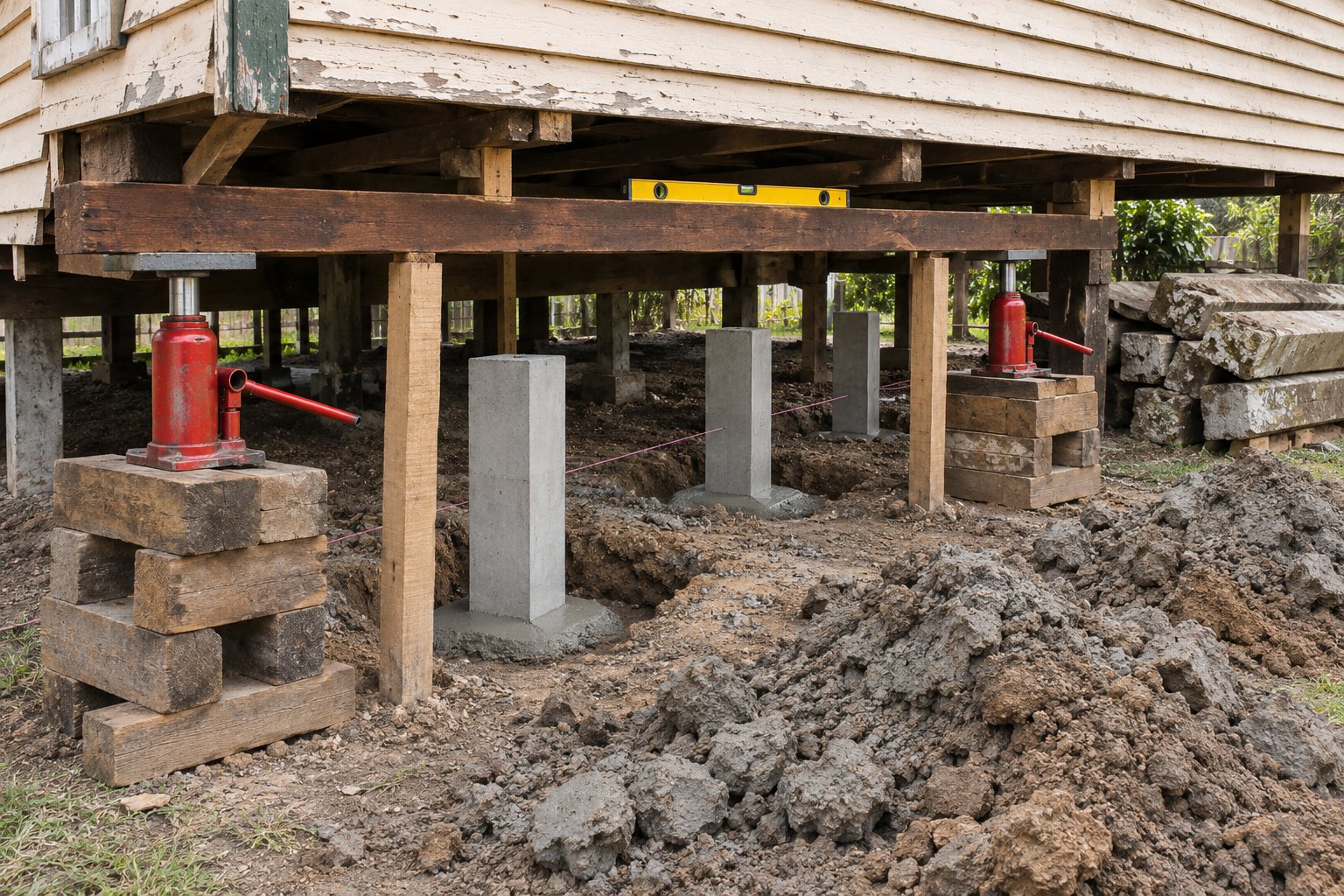
Reblocking in Gippsland means replacing the stumps that hold up the floor of a house, and in Victoria "reblocking" and "restumping" are used together for the same work. The Victorian Building Authority's 2017 notice says re-blocking, restumping, Wellington Shire's building permits page says Reblocking or restumping, and the sources we fetched draw no technical difference between the words. This page covers the whole-house job, where all the house stumps are replaced. Where only some have failed, see partial restumping.
We are a referral service. Your enquiry is passed to a builder who works in your town, and the builder does the work. One repair vendor's guide describes restumping as "replacing or renewing the stumps": the old stumps are removed and replaced, "usually with concrete or steel", the building may be lifted temporarily, and it is "more of a long-term solution when the foundation itself is failing".
What a whole-house reblocking job involves
A whole-house job replaces every stump under the house, and the bearers and joists they carry can be part of it. One building inspector's guide says that when the house is jacked, "damaged or decayed stumps and sub-floor elements are completely replaced". Whether bearers or joists need repair is found once the subfloor is open, so a quote should say what happens then and who agrees it.
The same inspector's guide says jacking can damage doorframes, plaster, tiles and ducted heating. Ask who repairs what and whether that work is in the quote. The process page sets out the steps in order, and the stumps guide compares timber, concrete and steel.
What the permit paperwork usually asks for
The Gippsland council pages we found do not list documents for restumping, so this list comes from one other Victorian council's guideline and another's checklist. It is typical paperwork from other Victorian councils' checklists, not a Gippsland rule.
| Document | What the checklists list |
|---|---|
| Drawings | A floor plan and the stump layout. |
| Footing section | Stump height above ground, hole depth and width, sole plate, stump type and size. |
| Site plan | Showing any easements. |
| Title | The certificate of title for the land. |
| Soil test report | If applicable. |
| Termite treatment | The method of termite treatment. |
| Builder's registration | The builder's registration details. |
| Engineer's computations | Where required. |
| Specification | Stump size, width and depth, ant capping and the connection to bearers. |
No page we found says who draws the stump layout. Ask the builder which documents they prepare, ask the surveyor what your job needs, and make the quote name who produces each one.
Permits for reblocking: what the Gippsland council pages say
Wellington Shire's building permits page says "Reblocking or restumping of an existing building: Permit Required." The same page says the Council does not issue building permits and that "Building Permits are issued by private Building Surveyors". It does not mention underpinning. The Sale and Maffra page has the Wellington detail.
East Gippsland's building permits page says the Council does not issue building permits, that private building surveyors do and that the owner is responsible for obtaining the permit, and it does not mention restumping or reblocking. South Gippsland's private surveyor list and the Business.gov.au page for Bass Coast do not mention it either. So three of the four pages we found are silent, and we cannot say what those councils require. Ask a registered building surveyor. All of this was checked 6 November 2026.
The Building and Plumbing Commission (BPC) says only the owner, or the owner's agent, may appoint a private building surveyor, and that a builder cannot appoint one for domestic building work under a domestic building contract (BPC page on appointing a surveyor). The permit page goes through all four councils.
Registration, contracts and insurance for a whole-house job
On registration, two statements sit side by side and we have not reconciled them. The Victorian Building Authority's 2017 notice, from the regulator before the BPC, says any builder "engaged in the business of re-blocking, restumping or the demolition or removal of a home" "is still required to be registered, regardless of the cost of the work". We did not find a BPC page that repeats it. The BPC says "Domestic building work worth more than $10,000 requires a registered builder" (BPC page on engaging a builder). Ask which registration class the builder holds and check it on the BPC register.
A major domestic building contract is needed above $10,000 and must be in writing (Consumer Affairs Victoria on major contracts). A whole-house job may sit above or below that line, and this site does not know your price. Home Warranty applies to eligible contracts signed from 1 July 2026 where the project is valued at more than $20,000, and the registered builder pays the premium (BPC Home Warranty page). That page does not mention restumping. If your contract is over the threshold, ask for the notice of cover before you pay anything.
Deposit limits apply, and they and the payment rules change by 1 December 2026, so check the current limit on the Consumer Affairs Victoria deposits page. All of this was checked 6 November 2026.
Flood and overlay points before you book
A planning overlay is a control in the council planning scheme that can add a planning permit step, and the pages we found do not say whether restumping triggers one in any named town. Ask the surveyor and the council what applies to your property, and read the flood and overlay page. This was checked 6 November 2026.
Comparing reblocking quotes
Ask each builder for the same lines: stump type, size and spacing, hole depth and width, the connection to bearers, the termite treatment method, what happens if bearers or joists need repair, and whether plaster and doorframe repairs are included. The quote checklist explains each line, and the cost guide lists what moves a price. When you are ready, send the town and what the house is doing.
What this page cannot do
It cannot tell you whether your house needs all its stumps replaced, because only someone under the floor can see them. It cannot say whether a permit applies in your town, because three of the four council pages we found do not mention restumping, and it cannot confirm that any builder holds a registration. A registered building surveyor decides the permit, and the BPC register shows who is registered. This site gives no price and does not do the work.
Check the current rules before you rely on this
This page describes what the regulator and council pages we found say about permits, registration, contracts and insurance for whole-house reblocking in Gippsland. It describes the rules in general terms as they stood in November 2026, checked 6 November 2026. Standards, forms, thresholds and fees change.
The authoritative sources are Wellington Shire Council, building permits (lists 'Reblocking or restumping of an existing building: Permit Required.'), Victorian Building Authority notice, 2017: clarification of changes to registration requirements for domestic builders (predecessor of the BPC; dated), Building and Plumbing Commission (BPC), engaging a builder, CAV, preparing a major domestic building contract (major contract threshold) and BPC, Home Warranty insurance (from 1 July 2026). Where anything here differs from those sources, they are right and we are not.
We are not builders, building surveyors, regulators or lawyers. For what applies to your job, ask the builder which registration they hold and check it on the Building and Plumbing Commission register, then ask a registered building surveyor and your council what is needed. Contract, deposit and payment rules change by 1 December 2026.
Accurate at the time of writing, November 2026. Always check the source before relying on it.