Signs your house needs restumping
The signs that a house may need restumping are mostly things you notice inside it, not under it. Three guides we read, one industry guide, one building inspector's guide and one repair vendor's guide, between them list these:
- uneven or sagging floors, sometimes sloping toward the weakest stumps
- doors and windows that stick or bind
- cracks in walls, ceilings or around openings, and cracked plaster
- squeaky floors
- glassware that rattles when someone walks past
- foundation cracks, and floors or slabs that are sinking
None of these proves that the stumps under the house have failed. A subfloor inspection finds the cause, and it is the only way to know whether the answer is house restumping, relevelling, underpinning or something else.
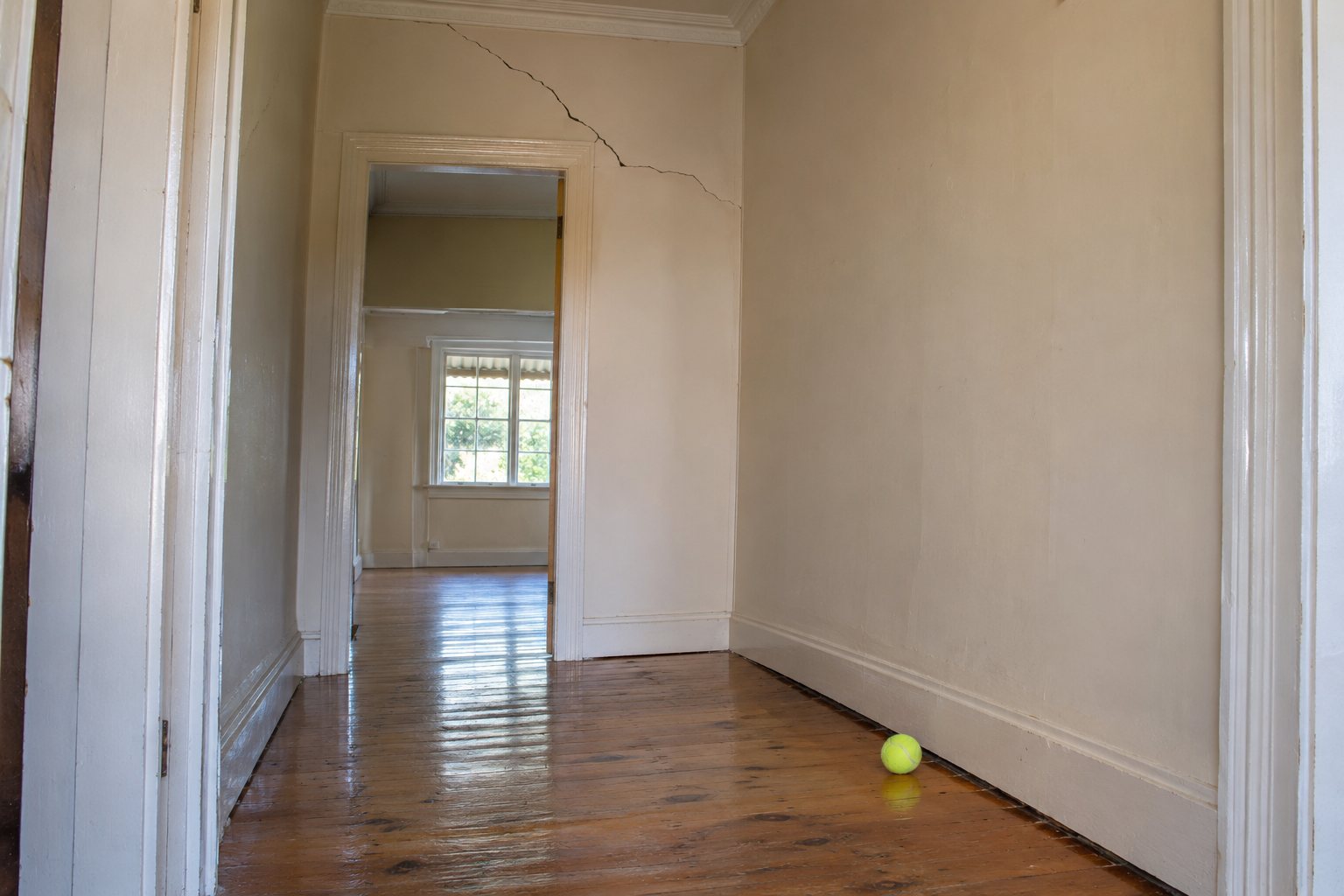
What else can cause the same signs
Sticking doors, cracks and squeaks can have causes other than the stumps, but no source we read lists them, so we do not guess. The position the guides share is simple: a subfloor inspection finds the cause. A cracked wall is not always a footing problem, and a squeaky floor is not always a failed stump. What the guides do is list the signs worth acting on.
It helps to make the inspection easy to compare. Photograph each sign with a tape measure beside it, note which rooms are affected and whether the sign has changed, and write down whether the floor slopes toward one corner or one side. Then ask whether the subfloor inspection report is a separate item or part of the quote, because one published guide treats an inspection report as a separate item.
What happens if you wait, and how often a house needs restumping
We found no source that gives a timeframe for what happens if a house is left, and none that gives an interval between restumps. Published guides pose both questions, and the extracts we read did not answer them with anything we could check. We would rather say so than offer a number. The practical point is smaller: a sign that has changed since you last looked is worth reporting to the person doing the inspection.
Do not try to settle the question yourself under the floor. We found no source on entering a subfloor safely, so leave it to the person doing the inspection. This site does not encourage owners to do restumping work themselves, and the permit page explains who appoints a building surveyor and what the council pages say.
Buying a house that needs restumping
If you are buying a house that may need restumping, ask for a subfloor inspection before you sign the contract, and ask whether the inspection report is a separate item. The inspection tells you what is under the floor; the signs above only tell you what is on top of it. A written inspection also gives you something to put in front of builders when you ask for quotes.
Some Gippsland towns have many dwellings that sit empty between visits. At the 2021 Census, 51.7 per cent of private dwellings in Cowes were unoccupied on census night (ABS QuickStats for Cowes), 40.8 per cent in Inverloch (ABS QuickStats for Inverloch) and 23.1 per cent in Paynesville (ABS QuickStats for Paynesville). Those figures include holiday houses, but the ABS pages do not say how many. If the house is one you visit a few weekends a year, the signs may build up unseen, and the Cowes and Phillip Island page covers organising an inspection from afar.
Gippsland ground, without a diagnosis
The ground under a house is part of the picture, but the soil surveys we read describe soils, not building sites, and none of them says whether the ground moves. They describe river flats of alluvium along the Mitchell and Tambo rivers at Lindenow (Lindenow soil description), clays and clay loams on the Strzelecki hill country of South Gippsland (Strzelecki soil description), and clays under a bleached layer, over cemented coffee rock, at Inverloch (Inverloch soil description).
That is background, not a cause. A soil test classifies the site, and a surveyor or engineer decides what a cracked wall or a sloping floor means. The soils and climate guide sets out what each survey says and where it stops, and the process guide shows what happens once the inspection says work is needed.
If you have noticed one or more of these signs, send your town, the type of house and a photo of the floor, and the enquiry goes to a local builder.
What this guide cannot do
This guide cannot diagnose your house. A sloping floor, a sticking door or a crack can have causes that nobody can judge from a description or a photo, and none of the sources we read lists them. We cannot say whether you need house restumping, relevelling, underpinning or nothing. We are a referral service: we pass your enquiry to a local builder, who inspects the subfloor and advises, and who holds any registration or insurance that applies. A registered building surveyor decides what paperwork the work needs.
Check the current rules before you rely on this
This page describes the signs that guides list for a house that may need restumping, what else can cause them, and where to look for the rules that apply to the work. It describes the rules in general terms as they stood in November 2026, checked 6 November 2026. Standards, forms, thresholds and fees change.
The authoritative sources are BPC, appointing a building surveyor, Victorian Building Authority notice, 2017: clarification of changes to registration requirements for domestic builders (predecessor of the BPC; dated), Building and Plumbing Commission (BPC), engaging a builder and Consumer Affairs Victoria (CAV), Domestic Building Consumer Guide. Where anything here differs from those sources, they are right and we are not.
We are not builders, building surveyors, regulators or lawyers. For what applies to your job, ask the builder which registration they hold and check it on the Building and Plumbing Commission register, then ask a registered building surveyor and your council what is needed. Contract, deposit and payment rules change by 1 December 2026.
Accurate at the time of writing, November 2026. Always check the source before relying on it.