House restumping on Phillip Island when you live elsewhere
If you own a house on Phillip Island that you visit a few weekends a year, house restumping is still your decision, your surveyor appointment and your contract. You do not have to be there for all of it. The jobs that need a person on site are the subfloor inspection, access and keys, and the builder's visits. This page sets out how an owner who lives elsewhere can organise those, plus the ground, coastal and planning facts we could verify for Cowes and the island. We checked 6 November 2026.
We are a referral service. We pass your enquiry to a builder who works on the island, and the builder quotes and does the work. Ask which registration class they hold and check it on the Building and Plumbing Commission register.
Cowes at the 2021 Census: half the dwellings were unoccupied on census night
At the 2021 Census, ABS counted 5,920 private dwellings in Cowes, and 2,939 of them, or 51.7 per cent, were unoccupied on census night (ABS QuickStats for Cowes). That includes holiday houses, but the ABS page does not say how many. For Bass Coast Shire as a whole, ABS counted 10,831 of 28,938 private dwellings unoccupied (39.4 per cent) (shire QuickStats). Those are census-night counts, so they point to how many houses sit empty between visits, not how many owners live elsewhere.
| Measure at the 2021 Census | Cowes | Bass Coast Shire |
|---|---|---|
| People | 6,593 (median age 55) | 40,789 |
| Private dwellings | 5,920 | 28,938 |
| Unoccupied on census night | 2,939 (51.7 per cent) | 10,831 (39.4 per cent) |
| Separate houses, share of occupied dwellings | 83.4 per cent | 91.4 per cent |
| Owned outright / rented | 46.3 per cent / 26.5 per cent | 46.7 per cent / 20.6 per cent |
Cowes had a median weekly household income of $1,026 at the 2021 Census. According to an encyclopedia entry (secondary source), the township was named Cowes in 1865, its post office opened on 1 August 1869, a jetty and ferry service followed in 1870 and a permanent bridge to the mainland in 1940 brought a boom in motels and caravan parks. Recent growth has replaced former farmland with estates and apartments. We do not use the encyclopedia's own percentage of owners who live elsewhere, because we could not verify it.
A sequence for an owner who lives elsewhere
The order matters more than the speed. This is one suggested order for an owner who is away. Only the surveyor step comes from the Building and Plumbing Commission's surveyor page; the rest is practical advice. The quote checklist covers the quote and contract steps.
- Subfloor inspection first. Ask the builder to photograph the subfloor and send you the pictures with notes. If the house has been closed up, ask what was found and what was not reachable.
- Appoint the surveyor yourself. Only the owner, or the owner's agent, may appoint a private building surveyor. A builder cannot appoint one for domestic building work under a domestic building contract (Commission's surveyor page). If you use an agent, say so in writing.
- Get the quote and contract on paper. Ask for an itemised written quote and a written contract, then read the registration, contracts and warranty guide. Where the contract is over the threshold on that page, the Home Warranty notice of cover should come before you pay anything.
- Agree access and keys. Say who holds the key, who lets the builder in and what happens if the house must be locked at night.
- Keep variations in writing. A bearer or joist found rotten once the subfloor is open can change the job. Ask how a variation is priced and sent to you before it is done.
- Ask for the programme in writing. No source we found gives a duration, so the builder's programme is the only answer.
Access, keys and who meets the builder
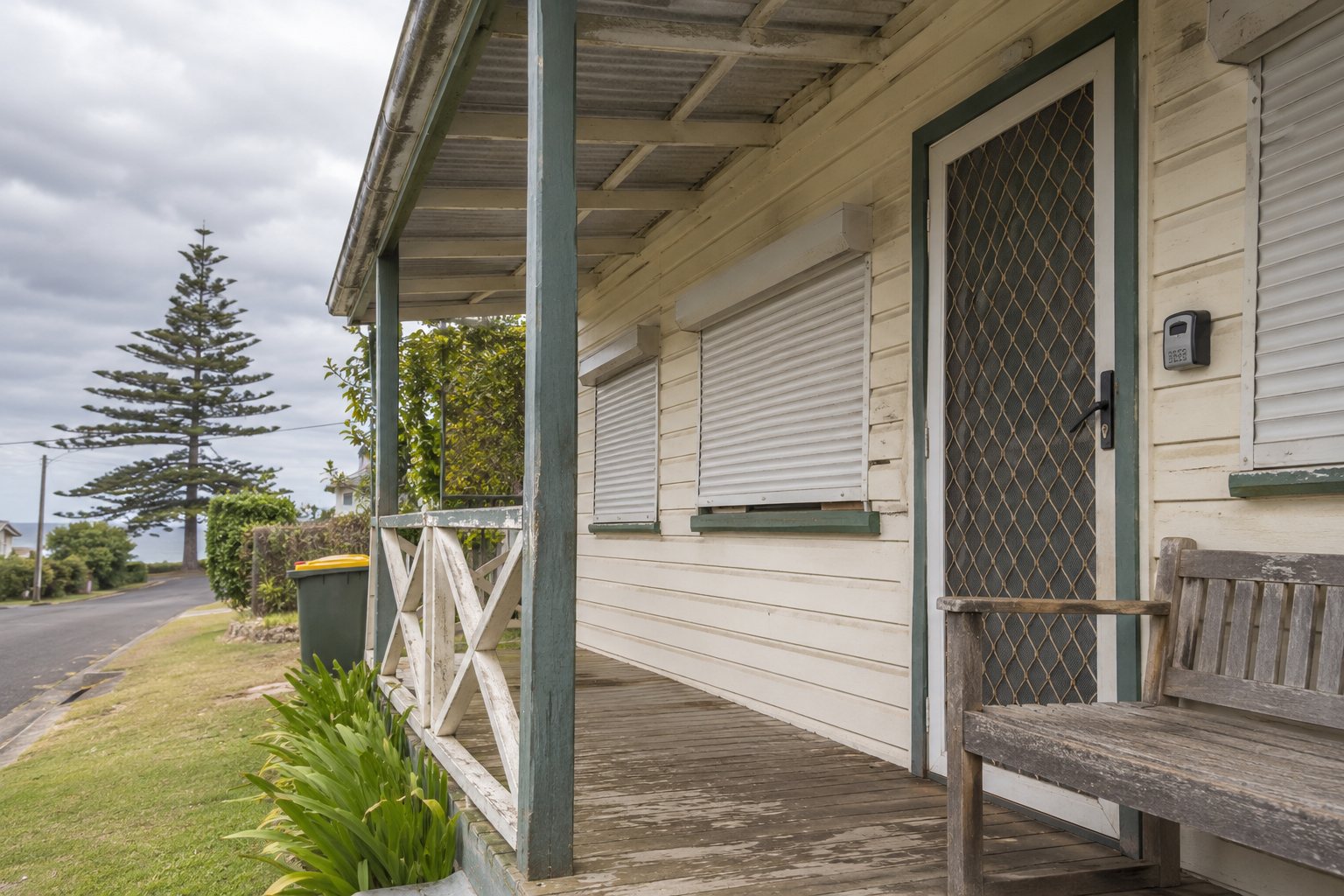
Someone has to open the house and sign off on what the builder finds. For an owner living elsewhere, that is usually you on a set day, a neighbour, a property manager or an agent you have named in writing. Choose one person, not three, and give the builder and the surveyor the same name and phone number. The surveyor needs access too: a registered building surveyor, private or municipal, issues permits, occupancy permits and certificates of final inspection, so their inspections are part of the job.
A key safe helps with access but does not replace a person. Ask the builder what they will do if the safe code changes, who is told when they arrive and leave, and how any damage found on entry is recorded. If your house is a rental or is let on short stays, settle the change-over dates with the builder first. This site found no rule on tenant or guest notice, so do not assume one. The signs guide lists what to look for on your next visit if you want evidence before you book.
Permits on the island: what the pages say
For a Cowes house, the permit pages we found are the same Bass Coast ones as in Wonthaggi, and they are silent on restumping. The business.gov.au ABLIS page says you apply through a registered building surveyor, private or municipal, and that a building permit cannot be issued until a relevant planning permit, if required, is obtained. It lists a 2026-27 lodgement fee of $142.10 for private surveyor documentation. The surveyor sets their own fee, and no restumping-specific fee appears on any page we found. We did not read the Council's own building page. Ask a registered building surveyor whether your house job needs a permit, and see our building permit guide.
Ground, weather and the coast
The one soil unit mapped on Phillip Island is a red clay over basalt. The Victorian Resources Online entry (Phillip Island soil entry) describes dark brown light clay or clay loam at the top, redder medium clay from about 200 to 300 mm, mottled clays from about 600 mm and decomposing basalt generally within 1.5 m. The page does not cover sand or drainage, and the coastal sands around Cowes are not covered at all. It describes soil for farming, not building classes, and a soil test classifies the site.
The only island weather table we could read is a closed station. The Penguin Reserve station (Bureau of Meteorology table) has a mean of 713.6 mm a year (rainfall record 1981 to 2018), with August the wettest month at 79.7 mm and January the driest at 33.4 mm. It stopped recording in 2018. No source we found ties rainfall to the timing of house restumping.
The SES lists no local flood guide for Phillip Island, and says coastal areas can flood when high tides combine with storm surge and onshore winds (SES local flood information). State planning policy asks for at least 0.8 m of sea level rise to be planned for by 2100. A news report of a 2023 VCAT matter at Silverleaves (newspaper report, a secondary source) says a refusal of an extension of time was upheld, relying mainly on Amendment VC171, gazetted on 6 September 2021. It adds that the site carried a Land Subject to Inundation Overlay and an Environmental Significance Overlay, and that Melbourne Water opposed. It reports one matter and says nothing about restumping, so do not read it as a rule for your house. See the flood and overlay guide for the general controls.
What to send, and what to ask
Send the town, whether the house is a holiday house or lived in, what you noticed on your last visit, who has the key and whether the subfloor can be entered. Ask for an itemised written quote and the programme in writing. Send your details when you are ready.
Other areas we cover: Bairnsdale, Paynesville and Lakes Entrance; Leongatha, Korumburra and Mirboo North; Sale and Maffra; Wonthaggi and Inverloch.
What this page cannot tell you
It cannot tell you whether your Phillip Island house needs a building permit, because the pages we found are silent on restumping and we did not read the Council's own building page. It cannot say how many empty houses belong to owners who live elsewhere, whether an overlay covers your street, or what the clay or sand under your house does. It cannot say how long a job takes. Ask a registered building surveyor and the Council, and ask the builder which registration class they hold and whether it is on the register.
Check the current rules before you rely on this
This page describes house restumping for holiday house and absent-owner situations in Cowes and on Phillip Island, with the permit, planning, ground and census facts we could verify. It describes the rules in general terms as they stood in November 2026, checked 6 November 2026. Standards, forms, thresholds and fees change.
The authoritative sources are BPC, appointing a building surveyor, Business.gov.au (ABLIS), building permit, Bass Coast Shire Council (not the council's own page), Victoria SES, your local flood information: Bass Coast Shire Council, Sentinel-Times, Cowes house permit decision (news, 24 May 2023 VCAT matter; secondary) and ABS 2021 Census QuickStats: Cowes (suburb and locality). Where anything here differs from those sources, they are right and we are not.
We are not builders, building surveyors, regulators or lawyers. For what applies to your job, ask the builder which registration they hold and check it on the Building and Plumbing Commission register, then ask a registered building surveyor and your council what is needed. Contract, deposit and payment rules change by 1 December 2026.
Accurate at the time of writing, November 2026. Always check the source before relying on it.